
No products in the cart.

Top Learning Accommodations Every Parent Should Know
Accommodations are adjustments made in the educational environment to support students with diverse learning needs. They do not change the curriculum’s content but instead provide alternate ways for students to access material and demonstrate knowledge. These changes aim to ensure equity in learning without compromising academic standards.
Common Learning Accommodations
Here are examples of accommodations that are frequently used to support student success:
- Extended Time: Extra time on tests or assignments helps students who need longer to process information or stay focused.
- Preferential Seating: Placing students closer to the teacher or away from distractions enhances engagement and concentration.
- Use of Technology: Tools like text-to-speech software or word processors support students struggling with reading or writing tasks.
- Reduced Assignments: Fewer problems or questions allow students to focus on mastering essential concepts without being overwhelmed.
Learning Accommodations for Specific Needs
Students with particular academic challenges may benefit from more targeted accommodations like the following.
Attention Challenges:
- Breaks: Short, scheduled breaks help students refocus. For example, a five-minute break after 20 minutes of work can improve productivity.
- Chunking: Breaking tasks into smaller parts makes assignments more manageable and supports sustained focus.
Reading and Writing Challenges:
- Audiobooks: Listening to content allows students to access material without decoding written text, which is helpful for those with dyslexia or similar issues.
- Graphic Organizers: Visual tools help students structure ideas clearly and support effective writing.
Math Challenges:
- Manipulatives: Physical objects like blocks help students grasp abstract concepts through hands-on experience.
- Calculators: Allowing calculator use shifts focus from basic computation to solving complex problems and applying reasoning skills.
Requesting Accommodations for Your Child
You can advocate for learning accommodations even if your child does not have an Individualized Education Program (IEP).
- Communicate with Teachers: Begin with a conversation. Share specific examples of difficulties and propose possible solutions.
- Gather Documentation: Collect reports, evaluations, or teacher notes that show your child’s struggles. Documentation supports your case.
- Collaborate with Staff: Involve counselors or administrators in finding effective strategies tailored to your child’s needs.
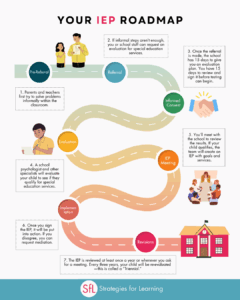
If your child has an IEP, the process is more structured:
- IEP Meetings: Attend scheduled meetings or request an additional meeting to review your child’s needs and suggest updates to accommodations.
- Review the IEP: Confirm that listed accommodations are being implemented. Raise concerns if they are not.
- Request an Amendment: If the IEP no longer fits your child’s needs, request changes to better reflect current challenges.
Accommodations are critical tools in supporting students with learning differences. They ensure access to education and help students demonstrate their true abilities. Whether through informal discussions or formal IEP processes, parents play a key role in securing these supports. Understanding how accommodations work and how to request them empowers families to help children succeed both academically and emotionally.
Written by Shendi Xu, Board-certified Exceptional Needs Specialist
For more resources on accommodations and navigating the IEP process, check out the following articles.





No comment yet, add your voice below!